A digital menu is not a PDF: what actually changes in the restaurant
A digital menu changes how you edit the menu, how fast it opens on a guest’s phone and whether you hear from the guest. Examples from a hotel in Basra.
In short
- A digital menu is a system with a control panel. Its value is that restaurant staff edit the menu themselves and the guest sees the change at once.
- How fast the menu opens on the guest’s phone comes down to how heavy the images are and how they are stored, long before design.
- A menu nobody is responsible for turns into an old list on a screen. Decide who updates it.
In this article
Many restaurants think a digital menu is the old menu saved as a PDF behind a QR code. The guest scans the code, a heavy file opens, and they have to pinch and drag the page around their phone to read it. That is paper moved onto a screen. Nothing in the restaurant has changed.
A real digital menu is a small system with a control panel and a database. I have worked on menu systems for restaurants and hotels in Basra, and this article explains what actually changes.
| Situation | PDF file | Digital menu with a control panel |
|---|---|---|
| Changing a price | A designer, then an export, then uploading a new file | A member of staff changes the number and saves |
| Hiding a sold-out item | Usually stays visible until the next edit | One tap in the panel |
| Languages | A file for each language | Arabic and English in the same menu, and the direction switches |
| Guest feedback | Never reaches you | A rating and a note reach management |
| Several branches | Scattered copies | One platform, and each branch has its own data |
Editing becomes an employee’s job, not a designer’s
The first thing that changes is who can edit. With paper or a PDF, every change goes through a designer. With a digital menu, an employee changes the price from their phone.
Aseer Time and Baba Kunafa are a close example. I built an admin panel for each of them, with items, images, branches and offers, so management can change prices, hide an item and put a star on the most ordered ones without waiting for a developer.
Sizes and extras
for every item, changing with the season
Scheduled offers
that start and end on Baghdad time with nobody stepping in
A cart per branch
so one branch’s order never gets mixed with another’s
A menu with sizes, extras, allergy information and offers does not fit on a PDF page at all, because each of those changes at a different time.
When the menu becomes an ordering channel
At Aseer Time and Baba Kunafa the menu is for more than reading. The guest opens an item, picks the size and extras, orders as a guest without signing up, then follows the order from a link. Baba Kunafa also has a short phone number and a button for ordering through WhatsApp, because some people would rather talk to the shop.
Management has a star to put on the most ordered items, and the ratings guests give each item are shown too. At this point the menu is part of how the restaurant sells. Owners learn what their customers like from the numbers, not from a staff member’s impression.
A hotel with several restaurants: an identity for each
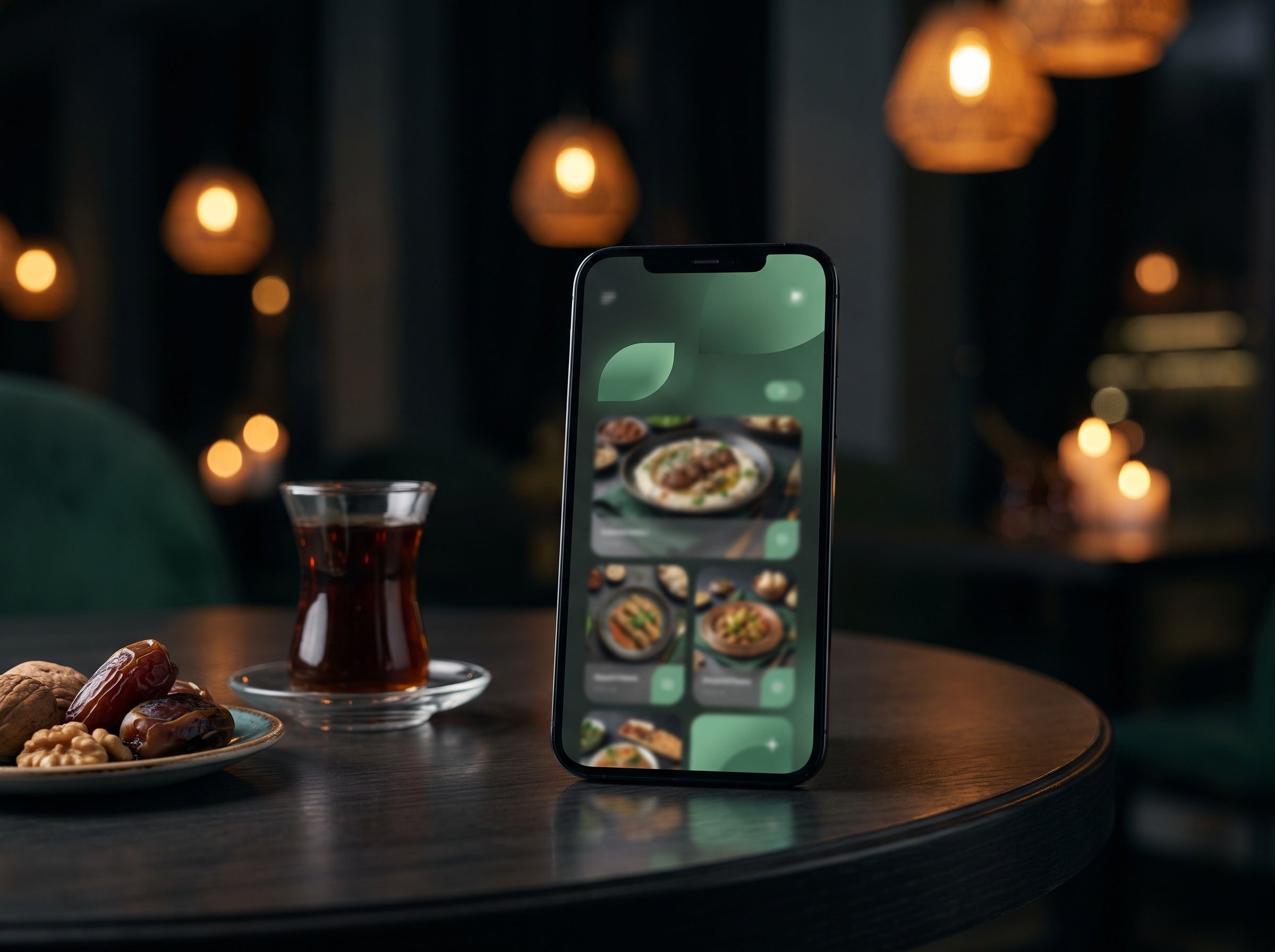
Grand Millennium Al Seef Basra has several restaurants, each with its own identity, menu and colours. Handing a guest one merged menu that mixed them all would have made no sense.
The platform was built to serve several restaurants from one system. Each restaurant has its own login code, design, logo and domain, while everything behind the scenes is shared. When we add a new restaurant, we import its menu from a spreadsheet rather than entering it item by item.
I should be honest about my part. The platform is the work of a team, and I was one of the people on it. My largest contribution was to performance and cloud storage, and after that to preparing the hotel’s version and its identity.
On this platform, a change made in the panel reaches the guest straight away. The menu asks the server whether anything has changed, so it does not reload everything when nothing has. It is a technical detail, but it is the reason that what you edit now is what the guest sees when they open the menu.
Speed on the guest’s phone
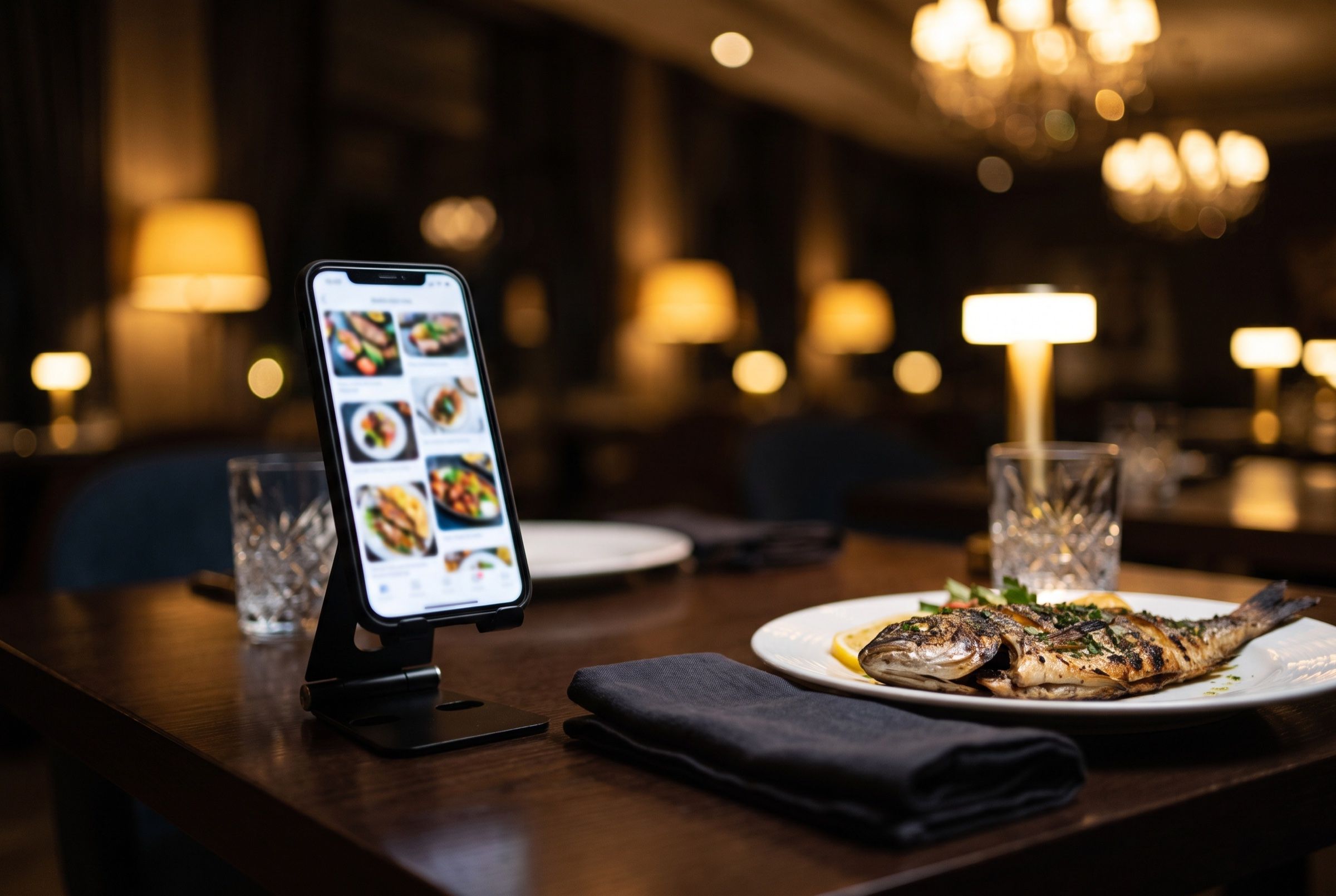
The guest opens the menu over their phone’s connection inside the restaurant, hungry and not inclined to wait. Every second of loading uses up a little of their patience.
This is the side of the platform I worked on most. We moved the images to separate cloud storage, and the item card now shows a small version in place of the full image.
The idea is simple: a small picture on a card does not need to be the size of a camera photo. Guests never see any of this, but they feel it when the menu opens quickly.
The guest: their language and their opinion
Two languages in one menu
The hotel receives guests who read Arabic and guests who read English. In its menu the guest chooses a language, and the page flips from right-to-left to left-to-right or back again. Section names, items and descriptions have translations stored in the system, so nobody redesigns a file for each language.
Management edits the translations from the control panel. To add a new item, you write its name and description in Arabic, then add the translation in the translations section.
The restaurant hears its guest
Paper does not tell you what the guest thought. A digital menu can. In the Grand Millennium Al Seef Basra menu the guest rates their experience with stars, writes a note, and answers questions that management sets.
Management sees all of it in one panel, with analytics charts.
- The guest scans the code
- Browses the menu in their language
- Rates their experience
- Management reads the rating
- Adjusts items and offers
The guest is never asked to install an app. The code opens the menu directly in the browser, which matters because nobody installs an app just to eat a meal.
When the menu goes beyond the list
The step after the menu is to connect it to what happens behind it. On the Enab platform, most of whose backend I developed, the menu connects to orders and the cashier on one screen, stock goes down with each sale, and the owner sees the numbers from anywhere. The menus of Al-Tazaj Snack, Bait Al-Kul and Basra Bowling Centre run on it today.
I advise every restaurant to keep a log of who changed what and when. The owner will need it once several people are editing the menu.
One more point, about the menu link: it should lead to a page of your own, not to a third-party service. So I recommend making the menu part of your website, drawing on one correct set of details for the name, address and hours.
What a digital menu does not solve
Warning: The menu nobody owns
A digital menu does not update itself. An old price on a screen is worse than an old price on paper, because the guest trusts the screen. An item shown as available after it has run out annoys the guest more than if it were missing.
Name one person who is responsible for the menu, just as you name who takes charge of the cash box. And fix a day each week for reviewing prices and items.
No system can fix a weak photo. If the photos of your dishes are dull, the menu will show them dull, and show them quickly.
There is also a matter of trust that should not be forgotten. When you collect guests’ phone numbers and dates of birth, you are holding personal data. Ask who can see it, where it is stored, and whether you can delete a guest’s data if they ask.
How to choose a menu system
Questions before you choose
The short version
A digital menu is worth paying for when it changes something in the restaurant’s day: faster editing, a lighter page, and a guest whose opinion reaches someone. When it is only a good-looking file behind a code, it is no different from paper. One question tests it: who changes the price, and how long does that take?
Projects mentioned in this article


Questions
Does the guest need to download an app to open the menu?
No. They scan a QR code and the menu opens in their phone’s browser, with nothing to install.
Can I change prices myself?
That is the first test of any menu system. If you need a designer or a developer to change a price, what you have is a PDF in another form.
Is a digital menu suitable for a small restaurant with one branch?
Yes, as long as the editing panel is simple. A small menu changes often, and easy editing helps it more than anything else.
Can restaurants inside a hotel have menus with separate identities?
Yes. At Grand Millennium Al Seef Basra each restaurant has its own identity, colours and logo on a single platform.