The tech job market in Iraq: what employers actually look for
Before you write your CV or post a job: what settles the decision for an employer, and how building a hiring platform changed the way I see tech recruitment.

In short
- Hiring in Iraq still runs on scattered posts and personal contacts, so clarity and proof of work come before certificates.
- An employer looks for signals that lower their risk: a project that runs, a CV that matches the job, and clear communication.
- Employers, for their part, should write an advert that defines the task, because a vague advert brings in many CVs that do not fit.
In this article
I am writing this from two positions. I build tech teams in Basra, and I worked on Taeen, an Iraqi hiring platform. From both I see the same picture: talented people nobody finds, employers buried in CVs that do not fit, and the two sides meeting more by chance than by design.
I should say plainly that I have no market statistics to lean on. What follows is an opinion based on what I saw while building a hiring platform and running a team. Take it on that basis.
How people are actually hired here
Jobs are announced in posts, groups and channels, and they travel by word of mouth and recommendation. That is where Taeen started: one place where people search for jobs and see company profiles and professionals’ previous work, with tools that take a candidate from CV to interview to offer.
There is nothing wrong with recommendation in itself. It is fast, and people trust it. Its weakness is that it shuts out anyone who does not know someone, and it leaves the employer choosing only among the people whose names happened to reach them.
Both sides know the problem a platform solves. A company posts an advert and receives a pile of CVs that do not fit, while the job seeker sends a CV to several places and hears nothing back.
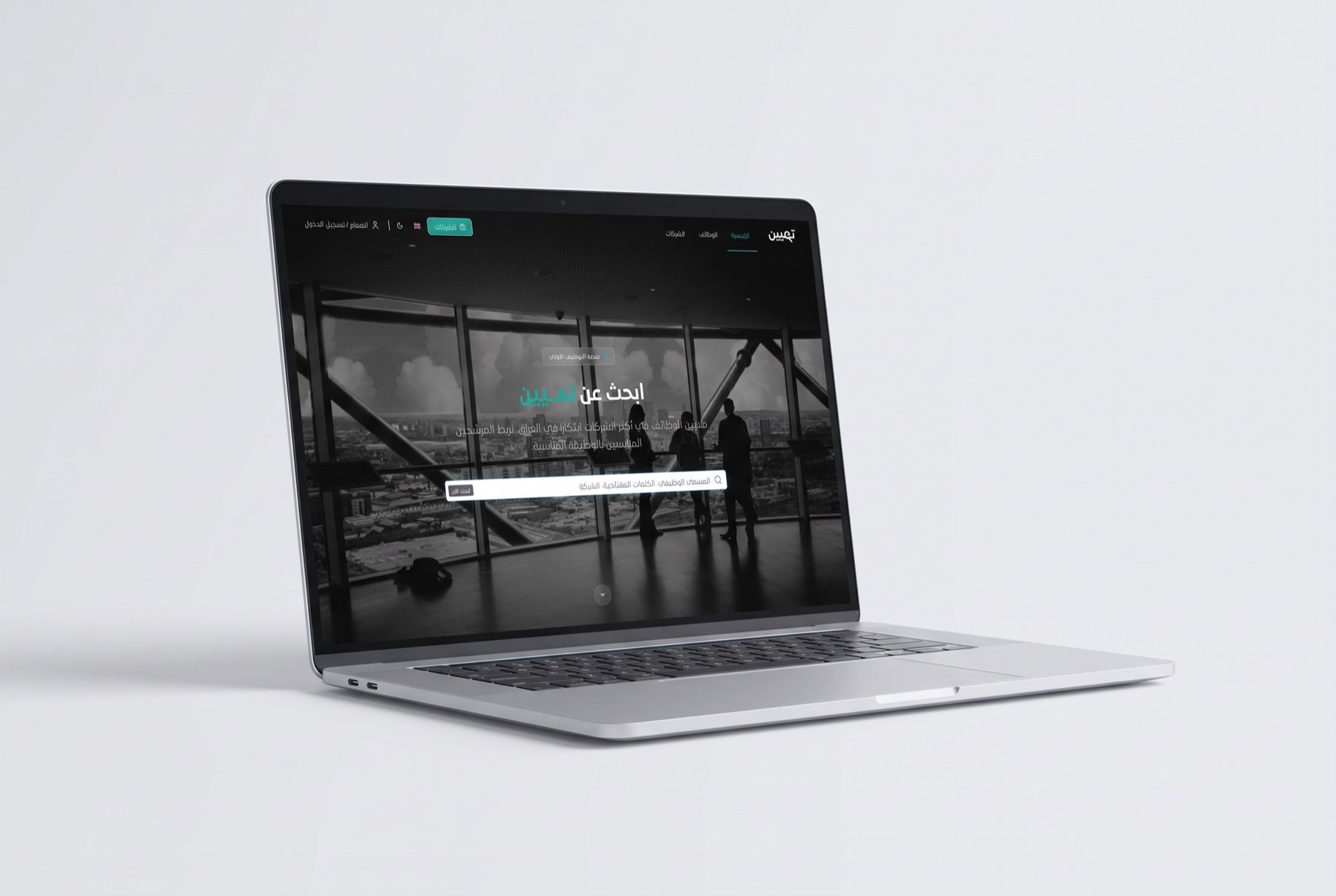
 AI-powered recruitment platformTaeenOne place where employers and job seekers in Iraq meet.

The market is not Baghdad alone
Taeen’s pages mention job seekers and employers from Baghdad, Basra, Erbil, Najaf, Mosul and Kirkuk. Since tech work can be done remotely, your candidate does not have to be in your city, and your job does not have to go to someone from your city.
But remote work needs clear communication and delivery on set dates, and I will come back to that below. Someone who has neither will not be rescued by an office.
What an employer reads in the first minutes
An employer is not really hiring skills. What they are buying is the certainty that you will deliver what they need without them standing over you. Everything in your CV either supports that certainty or adds nothing.
| Item | What many applicants write | What persuades an employer |
|---|---|---|
| Experience | A long list of technologies | One project that runs and can be opened |
| Learning | Course certificates | What you built after the course |
| CV | One version for every job | A CV that matches the advert in front of them |
| Message | ‘I am looking for an opportunity’ | A sentence saying what I can do for you |
An employer does not buy skills. They buy the certainty that you will deliver.
Read the company before you read the advert
Companies are not all looking for the same thing. A company building a product wants someone who takes ownership of the product and cares about its details. An agency delivering varied projects wants someone who delivers fast and moves easily between jobs. A large organisation often wants someone who follows procedure and documents their work.
This is a generalisation, but a useful one: work out what kind of company it is, then pick from your work what speaks to it.

Four signals that decide it
Proof of work
A link to something that runs is stronger than a description of something you have read about. If you have no previous work, make some: rebuild an app you use every day in your own way, and publish it. The project does not have to be big. What matters is that the employer can open it and see it for themselves.
Understanding the business
Frankly, someone who asks in the interview ‘how does the company make money from this system?’ gets my attention more than someone who lists the frameworks they know. A person who understands the business builds the right thing, not just the elegant thing.
Clear communication
Tidy writing, a reply people can understand, and keeping to a deadline you set yourself. In a remote team these are worth many technical skills, because nothing slows work down more than ambiguity.
Finishing
One project finished and handed over is better than five left half done. An employer wants to know that you see things through.

What the machine changes
In Taeen, AI tools read the job and the CV together and suggest a match score, and they review new jobs before they are published. Before an applicant can apply, the platform checks that their profile is complete.
What I take from this is that clarity serves you better than padding. When a machine reads the CV and the job side by side, a CV that says precisely what you did does better than one full of words you do not mean. The rule about complete profiles is not bureaucracy either. It spares the employer from opening empty profiles.
I do not want the machine to decide on its own who gets hired. I want it to sort and suggest, and leave the decision to a person who reads and interviews.
Before you send your CV
For those looking for a first job
This part is for beginners looking for their first opportunity.
First job: a small company or a large one
Beginners ask me this a lot. There is no single right answer, but this is how I see a small company as a place to start.
What it does well
- Early responsibility, and broader learning in less time
- You see the business from the inside and understand how it makes money
- Your work carries your name and you can show it
Where it falls short
- You may find nobody to correct you and teach you
- Tasks change fast, and there is not always a clear path to promotion
Ask in the interview who will be reviewing your work when you start. The answer matters more than the company’s name.
On salary and expectations
An applicant who knows what they want and can explain why is easier to negotiate with than one who says nothing and is then surprised. An employer who states the pay range in the advert saves both sides weeks of back and forth. That is my opinion, and I know many companies do not like to put numbers in public.
Advice for the employer
Job seekers are not the only ones who make hiring mistakes. Employers share in them when they write a vague advert and then complain about the number of CVs.
Tip: Write the task, not the list
An advert that lists ten technologies and no task attracts CVs that list ten technologies and no understanding. Write what the employee will build in their first period, and what you would count as success. Reply to the people you turn down with a short message, too, because your reputation as an employer is made in those messages.
If you are building your first tech team, hire a person who takes ownership of the problem, not a list of skills. A skill can be learned on the job. Caring whether something succeeds is much harder to train.
How I test a candidate
I prefer to test what I will actually ask the candidate to do. A small task close to the company’s real work shows more than theoretical questions everyone has memorised. I look at how they think about the problem, what they ask before they start, and how they explain what they did.
I respect their time as well. The task is small and specific, and they get a reply afterwards whatever the outcome.
The short version
The clearest candidate wins, not the one with the most certificates. Make your work visible, your CV readable in a minute, and your replies dependable. If you are the employer, make your advert as clear as you expect applicants to be.
Projects mentioned in this article


Questions
Is a university degree enough to get a tech job?
Not on its own, in my view. It opens the door, but what settles the decision is proof of work you did yourself and how you communicate.
How can an employer avoid hundreds of unsuitable CVs?
With an advert that describes the task the employee will build, not just a list of technologies, and with a platform or form that checks an applicant’s profile is complete before it reaches you.
Does the candidate have to be in the company’s city?
Not always. Tech work can be done remotely, but that takes clearer communication on both sides and delivery on known dates.